
Who We Are
US CLIVAR is a national research program with a mission to foster understanding and prediction of climate variability and change on intraseasonal-to-centennial timescales, through observations and modeling with emphasis on the role of the ocean and its interaction with other elements of the Earth system, and to serve the climate community and society through the coordination and facilitation of research on outstanding climate questions.
Our Research
The ocean plays a key role in providing a major long-term "memory" for the climate system, generating or enhancing variability on a range of climatic timescales. Understanding the ocean's role in climate variability is therefore crucial for quantifying and harnessing the predictability inherent to the Earth system. US CLIVAR-led research has played a substantial role in advancing understanding of, and skill in predicting climate variability and change.
Science and Research Challenges
Subseasonal-to-
Seasonal Prediction

Decadal Variability
and Predictability
Climate Change
Climate and Extreme
Events

Polar Climate Changes

Climate and Marine
Carbon/Biogeochemistry

Climate at the Coasts
Announcements
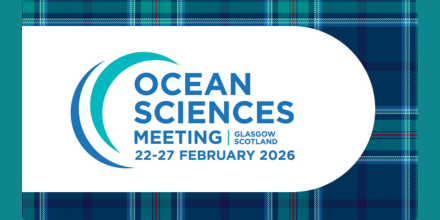
US CLIVAR Related Sessions at the OSM26 Meeting
The deadline to submit an abstract is August 20 一 Registration is now open!
US CLIVAR Related Sessions at the Fall 2025 AGU Meeting
Submit an abstract by July 30 to connect with experts in the Earth and climate community.
US CLIVAR Related Sessions at the 2026 Annual AMS Meeting
Abstract submission deadlines vary by session, with many having a deadline of August 14.
June Newsgram is Available
Stay informed with the latest news, research highlights, webinars, data sets, meetings, funding, career opportunities, and jobs for the climate science community.
Upcoming Webinars
Usable Climate Risk Science Webinar Series
Kelly Herald, Liberty Mutual Insurance
Fran Moore, UC Davis
Zong-Liang Yang, UT Austin
Join us for the first webinar in a new series, Usable Climate Risk Science, hosted by the US CLIVAR Working Group on Accelerating Research on the Scientific Foundations of Regional Climate Risk Information.