Who We Are
US CLIVAR is a national research program with a mission to foster understanding and prediction of climate variability and change on intraseasonal-to-centennial timescales, through observations and modeling with emphasis on the role of the ocean and its interaction with other elements of the Earth system, and to serve the climate community and society through the coordination and facilitation of research on outstanding climate questions.
Our Research
The ocean plays a key role in providing a major long-term "memory" for the climate system, generating or enhancing variability on a range of climatic timescales. Understanding the ocean's role in climate variability is therefore crucial for quantifying and harnessing the predictability inherent to the Earth system. US CLIVAR-led research has played a substantial role in advancing understanding of, and skill in predicting climate variability and change.
Science and Research Challenges
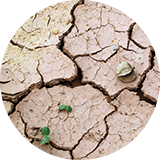
Subseasonal-to-
Seasonal Prediction

Decadal Variability
and Predictability
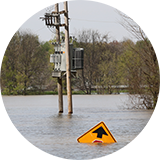
Climate Change
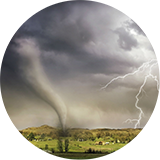
Climate and Extreme
Events
Polar Climate Changes
Climate and Marine
Carbon/Biogeochemistry

Climate at the Coasts
Announcements
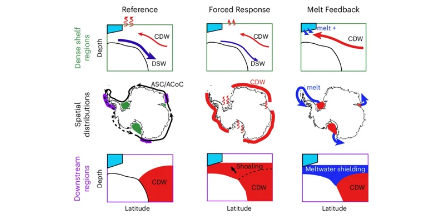
The hidden feedbacks driving Antarctic ice shelf melt
Youngs et al. (2026) use a circumpolar Antarctic ocean–sea ice model that explicitly incorporates ice shelves to investigate how climate change and melt‑driven feedbacks influence future changes across the Antarctic continental shelf and ice shelves.
NOAA Funding Opportunity: Super Intelligence/Machine Learning Innovation
NOAA’s Climate Program Office has released a new Notice of Funding Opportunity (NOFO), Super Intelligence/Machine Learning Innovation to Advance NOAA’s Earth System Science and Support Hazard Resilience.
GCOS Status Report and High-Priority Action Plan: Public Review Now Open
The Global Climate Observing System (GCOS) has opened a public review of three documents: the 2027 GCOS Status Report, the High-Priority Action Plan, and a supporting Technical Review.
How are eddies energized in the California Current?
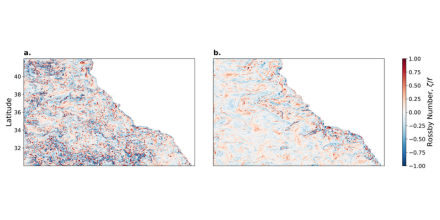
Gazeley et al. (2026) examine upper-ocean stratification in the California Current from March to October 2023. Researchers find that small, rapidly rotating eddies dominate in winter, while larger, smoother eddies prevail in the summer.
Upcoming Webinars
There are no upcoming Webinars at this time.