Synchronous fire danger strains fire suppression resources
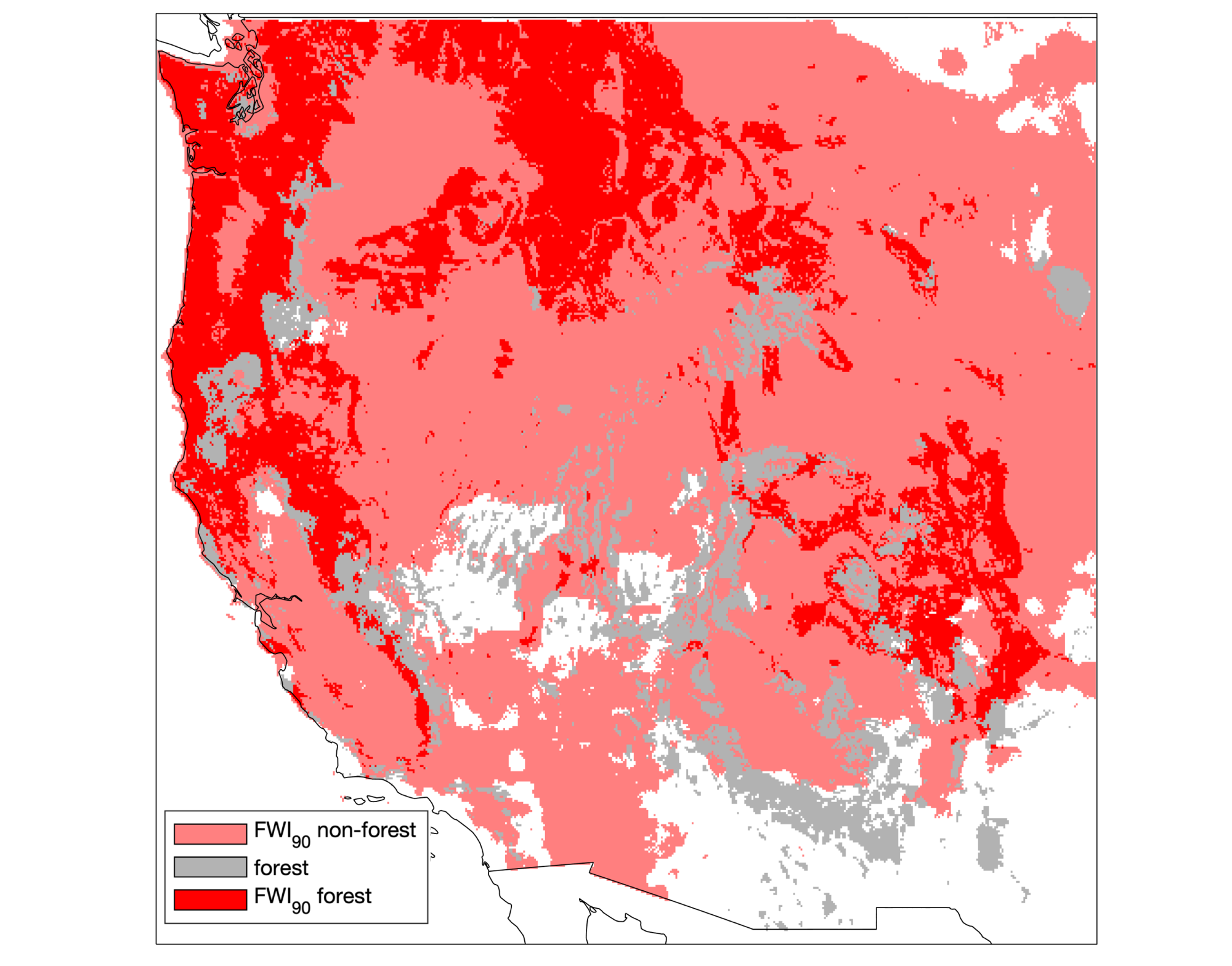
Fire weather – a combination of wind, humidity, and fuel receptivity is an important ingredient in fire outcomes and the ability of local fire suppression activities to contain a fire. While studies have demonstrated strong links between both daily and interannual variability in fire weather conditions and fire activity, this study explores links between spatially compound extremes in fire weather, national fire suppression resource strain, and burned area across forests of the western US. Widespread or synchronous elevated fire weather can enable and drive fire spread across multiple geographic regions leading to strain on both regional and national fire suppression resources, potentially compounding local fire suppression efforts on existing and new fire incidents and escalating regional fire activity. Synchronous fire danger was defined by days where fire weather indices exceed the local 90th percentile over at least 40% of forested land cover in the West. Year-to-year variability in synchronous fire danger days was strongly correlated with the number of high fire national resource strain days, with many of the most active fire years in recent decades such as 2017, 2018, and 2020 having over 50 days of synchronous fire danger. Years with chronic synchronous fire danger show additive effects to total forested burned area in the West beyond those modeled using regional climate-burned area models, potentially indicative of reduced initial-attack response on new fires that increase the odds of a fire becoming large. While largely absent from current fire modeling efforts, such factors may be an important consideration for future model development.
During 1979-2020, there was a 25-day increase in the annual number of days with synchronous fire danger across the West, or about a 160% increase. Such changes reflect ongoing increases in fire danger during the warm season that have occurred with background warming, declining relative humidity, and regional decreases in precipitation frequency. Climate projections show a doubling of synchronous fire danger days by the mid-to-late 21st century under a moderate emissions trajectory. Absent substantial changes in fuels, ignition patterns, and land management, climate change may continue to challenge fire management efforts across the region. This will likely escalate the odds of years with prolonged periods of synchronous fire danger — conditions that have historically strained suppression efforts and contributed to additional burned area — requiring new strategies for coping with anticipated surges in fire suppression demand.