
Research Highlights
We aim to feature the latest research results from US scientists whose published paper features work that is sponsored by one or more sponsoring agency programs of US CLIVAR (NASA, NOAA, NSF, DOE, ONR). Check out the collection of research highlights below and sort by topic on the right. Interested in submitting an article for consideration? See our Research Highlight Submission Guidelines page for more information.
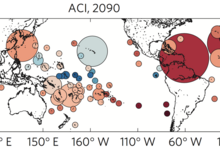
Future changes in freshwater availability are a major concern in the context of climate change. New research finds that overall changes to island freshwater balance will shift towards greater aridity for over 73% of 80 globally distributed island groups identified, impacting 16 million people by mid-century.
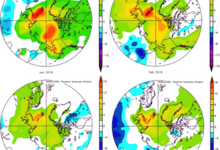
Right from the beginning of 2016 new records were set in the Arctic: warmest air temperature on record in both January and February, and the lowest sea ice cover in February. This year’s record high temperature and low sea ice cover increases concerns about what will happen next in the Arctic and globally under a changing climate.
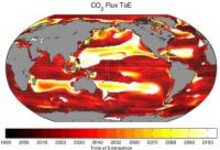
The ocean carbon sink is a cumulative net sink of anthropogenic carbon from the atmosphere, having absorbed 41% of all emissions due to fossil fuel and cement manufacturing. New research uses a climate model to estimate when growth of the carbon sink could be detected from the noise of the natural variability.
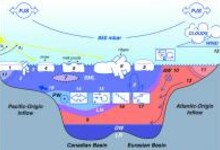
The fate of sea ice in the Arctic Ocean in the coming years and decades is dependent upon our understanding of the complex ocean–ice–air interactions and feedbacks to the system. A new paper by Carmack et al. identifies the critical processes, key questions, and required elements for a research agenda to study this new Arctic environment.
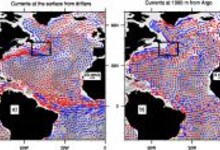
The Atlantic Meridional Overturning Circulation (AMOC), a large-scale circulation pattern in the Atlantic, plays a central role in climate through its heat and freshwater transports. New research proposes monitoring a specific region that may enable scientists to better predict AMOC variability and future climate.