
All Announcements

US CLIVAR-Related Sessions at the 2027 Annual AMS Meeting
The 107th Annual Meeting of the American Meteorological Society will take place January 10-14, 2027 in Denver, CO, and online. This year's theme is PEOPLE: People Educated On Planet Live Empowered. The meeting will highlight how PEOPLE advance societal wellbeing through research, technology, forecasting, data, protocols, education, consulting, communication, and more.

US CLIVAR-Related Sessions at the Fall 2026 AGU Meeting
The 2026 Fall AGU meeting will take place December 7-11, 2026, in San Francisco, CA. The theme, "Where Science Connects Us," will explore and celebrate the connections shaping the broader Earth science community. Abstract submissions are due Wednesday, August 5.

June Newsgram is Available
The latest news, research highlights, webinars, data sets, meetings, funding, career opportunities, and jobs for the climate science community.
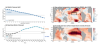
Simple ocean-based model shows El Niño forecast skill and points to a strong event ahead
Wang et al. (2026) present the Wyrtki CycloStationary Linear Inverse Model (Wyrtki-CSLIM), which leverages Wyrtki and Hasselmann memory to demonstrate that skillful ENSO forecasts can be generated up to 15 months in advance using a relatively simple framework based on sea surface temperature and sea level observations.
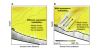
Beyond wind-driven mixing: New insights into vertical exchange at a coastal front
Körner et al. (2026) show that symmetric instability (SI) can drive efficient vertical exchange in the northern Gulf of Mexico, transporting oxygen and heat between surface and bottom waters. High-resolution observations show that SI can transport oxygen and heat much more efficiently than turbulence alone, helping ventilate low-oxygen bottom water and influencing coastal ecosystem health.
Registration is open and poster abstract submission deadline extended
To confirm your registration for the US CLIVAR Workshop on Quantum Computing and Sensing for Weather and Climate Applications, submit your payment through this page by July 19 for in-person attendance or July 27 for virtual attendance.
Poster abstract (for both in-person and virtual) submissions has been extended to July 19. Submit your abstract on quantum computing for Earth System Models, extreme weather, quantum algorithms, and quantum sensing by using this form.

May Newsgram is Available
The latest news, research highlights, webinars, data sets, meetings, funding, career opportunities, and jobs for the climate science community.

Multiple NSF vacancies have been announced
The NSF recently released job openings aimed at early career scientists and engineers. These roles involve supporting program directors with portfolio planning, identifying emerging research areas, managing proposal reviews, and engaging with the research community. One position of interest, STEM Analyst, supports the NSF Directorate for Geosciences. Additional positions are available for a limited time on the NSF careers webpage via USAJobs.

April Newsgram is Available
The latest news, research highlights, webinars, data sets, meetings, funding, career opportunities, and jobs for the climate science community.
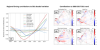
Quantifying the contributions of surface forcing to sea level variability along the US Gulf Coast
Delman et al. (2026) use an adjoint model from the observationally-constrained Estimating the Circulation and Climate of the Ocean (ECCO) state estimate to quantify surface atmospheric and hydrologic forcing to sea level, highlighting the value of observation-constrained dynamical models to asses regional sea level change, and the importance of adjoint models for attributing past variability and projecting future change.