All Announcements
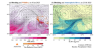
Gaps and ways forward in atmospheric blocking and extreme weather research
The Scientific Organizing Committee (SOC) of the 2024 US CLIVAR Workshop on Blocking and Extreme Weather in a Changing Climate has published a perspective article in Nature Communications, “Gaps and ways forward in atmospheric blocking and extreme weather research.” The article outlines key processes and challenges in understanding blocking extremes, including metrics, diabatic heating, and land-atmosphere interactions, and discusses perspectives on ways forward such as improving models, using AI/ ML techniques, and leveraging S2S datasets.
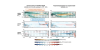
Tracing the origins of equatorial Pacific biases in a coupled climate model
Wu and co-authors trace the origins of the eastern equatorial Pacific cold tongue bias in the NOAA Geophysical Fluid Dynamics Laboratory (GFDL) SPEAR coupled climate model (SPEAR_LO; Fig. 1d-f) using a set of mean-state correction experiments.

March Newsgram is Available
The latest news, research highlights, webinars, data sets, meetings, funding, career opportunities, and jobs for the climate science community.

February Newsgram is Available
The latest news, research highlights, webinars, data sets, meetings, funding, career opportunities, and jobs for the climate science community.
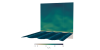
Coupled air-sea simulations reveal the dynamics of surface wave growth and breaking-induced dissipation
Leveraging coupled air-sea simulations to recreate wind-driven waves under strong wind conditions, Scapin et al. (2026) demonstrate that the energy dissipated due to ocean wave breaking is determined by the energy stored in the waves, and is not directly dependent on the instantaneous wind speed.

Optimizing Ocean Observing Networks for Detecting the Coastal Climate Signal Workshop Report is Published
Taking place in September 2024, the joint US CLIVAR and IOOC Optimizing Ocean Observing Networks for Detecting the Coastal Climate Signal workshop report is published. The report outlines four key recommendations to strengthen collaborations between the ocean and climate science communities and accelerate the co-design of an optimized observing system, taking into account both event-scale and long-term climate variability.
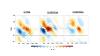
How interfering waves drive the MJO
A new study by Marsico et al. (2026) shows how the Madden-Julian Oscillation (MJO)'s evolution is driven by superposition of a 45-day period "fast" mode and a newly identified 70-day period "slow" mode, rather than indices that treat the MJO as a single wave.
Micro2Macro: Origins of Climate Change Uncertainty Workshop Report is Published
The US CLIVAR Micro2Macro: Origins of Climate Change Uncertainty workshop report discusses a roadmap, Bayesian Inference Frameworks for the Earth System (BIFES), to confront and evaluate climate models using observations to improve our process-based understanding and strategically reduce climate change projection uncertainty.

The dynamics of the Atlantic extratropical–tropical teleconnections
Joshi and Zhang (2025) demonstrate that southward advection of upper extratropical-tropical North Atlantic signals by the North Atlantic subtropical gyre plays a central role in forming the characteristic cold SST horseshoe pattern.

January Newsgram is Available
The latest news, research highlights, webinars, data sets, meetings, funding, career opportunities, and jobs for the climate science community.