
Research Highlights
We aim to feature the latest research results from US scientists whose published paper features work that is sponsored by one or more sponsoring agency programs of US CLIVAR (NASA, NOAA, NSF, DOE, ONR). Check out the collection of research highlights below and sort by topic on the right. Interested in submitting an article for consideration? See our Research Highlight Submission Guidelines page for more information.
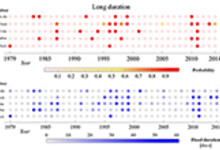
A Bayesian network inference model was developed to account for and predict the likelihood of floods of various durations using physics informed predictors.
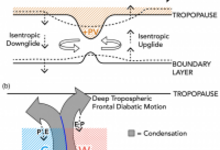
New research illustrates that the key to recognizing the influence of the Gulf Stream and Kuroshio Extension on the seasonal mean and longer-term climate is through a proper understanding of how the ocean influences atmospheric fronts.
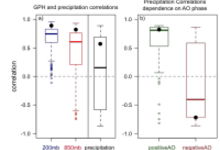
California precipitation is well forecast when the Arctic Oscillation phase is correctly captured by a state-of-the-art forecast system, GloSea5.
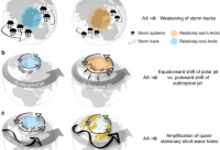
Researchers conduct a comprehensive review of research on summer weather stalling, focusing on the influence of Arctic amplification and how it could interact with other factors influenced by climate change.
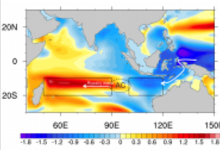
In two papers, Jin and coauthors investigated how decadal variations of subsurface ocean heat content (50–300 m) in the Indian Ocean respond to conditions in the Pacific region.